2026 Top Clearance Swing Sets for Global Buyers
The 2026 market for clearance swing sets offers global buyers attractive savings, but price alone should never guide a purchase. A discounted set may include sturdy steel frames, weather-resistant timber, or softer rubber seats. It may also hide missing accessories, unclear assembly instructions, or limited warranty support. Buyers should examine product dimensions, packed weight, age recommendations, and surface requirements before ordering. Small details matter. A low-cost set can become expensive after overseas freight, customs handling, and replacement-part fees. Experienced sourcing teams compare several suppliers, request current factory images, and verify testing documents before making a decision.
Reliable suppliers should explain materials, load limits, coating methods, and inspection procedures in plain language. Independent safety testing can strengthen confidence, although requirements differ between destinations. European, North American, and other regional standards may not be identical. Buyers should confirm local installation rules with qualified professionals. That step is easy to overlook. We have seen attractive listings fail practical checks because the swing footprint was too large for the planned garden. Product photos also rarely show uneven ground, drainage problems, or the space needed for safe movement. Some shipping estimates will change. That is frustrating, but honest planning allows room for delay. This guide examines the most promising 2026 clearance swing sets through a practical lens, balancing purchase price, durability, documentation, shipping realities, and long-term family use. No single model fits every market. Careful questions still provide the best protection.

2026 Clearance Swing Sets: Definition, Types, and Global Buyer Scope
Clearance swing sets are not automatically used products. They may include overstock, discontinued models, opened cartons, or seasonal inventory. For global buyers, the condition must be stated clearly. A scratched frame and a missing bolt are very different risks. That detail matters.
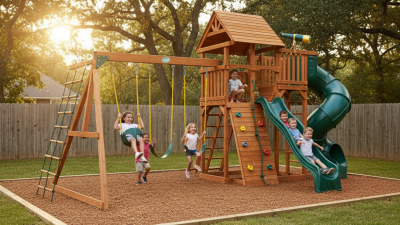
The main types include residential A-frame sets, commercial metal structures, wooden play towers, toddler units, and compact plastic systems. Belt seats suit older children, while bucket seats provide stronger support for younger users.
Market outlook
Grand View Research and Mordor Intelligence reports place the broader playground equipment market on a steady growth path, with annual expansion estimates commonly around 6% to 8%. Swing sets remain a practical entry product because they need less space than complete playground systems.
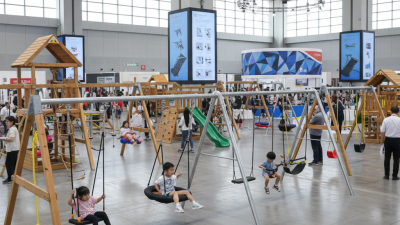
Global buyers include importers, schools, hospitality projects, distributors, and municipal contractors. They should check load ratings, packaging dimensions, replacement-part availability, and corrosion protection before ordering.
ASTM F1487 and EN 1176 are important reference standards, but local requirements still control installation and inspection. The U.S. Consumer Product Safety Commission also stresses protective surfacing and fall-zone planning in its Public Playground Safety Handbook.
Clearance pricing can be attractive. Freight can erase the savings. Sometimes it does. Buyers should request dated photos, inspection records, hardware lists, and honest defect descriptions before payment.
Market Evidence: Forecast Growth, Price Bands, and Buyer Demand by Region
2026 Top Clearance Swing Sets for Global Buyers
Market evidence suggests steady expansion, but swing-set forecasts need careful reading. Grand View Research estimates the global playground equipment market at about US$4.4 billion in 2023. It projects roughly 5% annual growth through 2030. Definitions differ across reports. Some include commercial parks, while others count residential equipment.
North America remains a strong revenue market, supported by backyard renovation and replacement demand. Asia-Pacific is expected to grow faster, driven by urban housing projects and public recreation investment. European buyers often prioritize compact footprints, documentation, and weather resistance.
Clearance price bands commonly sit near US$80–180 for basic residential units, US$180–450 for larger sets, and above US$700 for heavier commercial models. Freight can change the final price sharply. A low listing is not always a low-cost purchase.
Tips: Compare landed cost, not unit price. Request steel thickness, coating details, carton dimensions, and load testing records. Check anchoring requirements for local ground conditions. Also confirm spare-part availability before payment. Mistakes happen here.
The OECD’s consumer product safety guidance supports clear assembly instructions and foreseeable-use testing. ASTM F1148 and EN 71 references can strengthen buyer confidence, although applicable requirements vary by destination. For global clearance purchasing, dated inspection photos matter. They reveal rust, missing hardware, faded labels, and packaging damage better than polished catalog images. Forecasts guide decisions, but physical evidence still deserves the final vote.
Safety Benchmarks: ASTM F1487-21, EN 1176-1:2017, and CPSC Guidance
2026 Top Clearance Swing Sets for Global Buyers
Clearance pricing should never weaken safety decisions. ASTM F1487-21 provides detailed requirements for public-use playground equipment, including swing structures, entrapment risks, sharp edges, structural strength, and use zones. Buyers should request current test reports, installation instructions, and material specifications before approving a shipment.
EN 1176-1:2017 sets broad safety principles for playground equipment in European markets. It addresses access, falls, impact areas, openings, corrosion, and equipment durability. Swing clearances need careful checking. The front and rear use zones must remain free from poles, benches, walls, and hard landscaping. Loose-fill surfacing also needs adequate depth and regular maintenance.
CPSC guidance helps buyers assess protective surfacing, supervision, installation, and inspection routines in the United States. It is guidance, not a universal replacement for local requirements. That distinction is easy to miss. A product may satisfy one benchmark but still require local review, updated testing, or professional installation.
In practical inspections, small details often create larger risks. A low branch can enter a swing path. A drain cover can sit inside a fall zone. Even accurate drawings may not reflect uneven ground after installation. Buyers should measure the finished site, record surface depth, and inspect connections after assembly. Clearance inventory deserves the same scrutiny as new equipment. Perhaps more, because storage damage and missing parts can be overlooked.
2026 Top Clearance Swing Sets for Global Buyers
Safety reference points: ASTM F1487-21, EN 1176-1:2017, and CPSC Public Playground Safety Guidance
Example calculation for a swing with a 2.4 m pivot height. CPSC guidance identifies a 6 ft (1.83 m) minimum use zone at the sides and a front-and-rear use zone extending twice the pivot height, resulting in 4.8 m in each direction and 9.6 m across the full swing path. ASTM F1487-21 and EN 1176-1:2017 should be reviewed together with the applicable swing-specific requirements and local regulations before final installation.
Product Assessment: Materials, User Capacity, Fall Zones, and Warranty Data
2026 Top Clearance Swing Sets for Global Buyers
A clearance price can hide important material differences. Inspect the frame, hardware, seats, and connectors before comparing offers. Galvanized steel should resist rust, while treated timber needs sealed cuts and regular moisture checks. UV-stable plastic can reduce cracking in sunny climates. However, material names alone prove little. Ask for coating details, load tests, and maintenance instructions.
Capacity needs careful reading. A set may list four seats but support fewer users simultaneously. Check each seat’s maximum user weight, the total frame capacity, and the recommended age range. Allow practical spacing between users, especially when children swing at different speeds. More capacity is not always better. I have seen crowded layouts look attractive online but feel unsafe during real play.
The fall zone deserves equal attention. Measure clear space around every swing, slide, and climbing point. Use impact-absorbing surfacing at the depth required by local guidance and the product manual. Grass may look soft, but it can harden after drought. Warranty data should separate structural coverage from paint, fabric, plastic, and moving parts. Check duration, exclusions, proof-of-purchase rules, replacement-part access, and regional service limits. A long warranty sounds reassuring. It may still exclude corrosion or installation errors. Buyers should request dated documents, translated instructions, and independent inspection advice where available. Clearance stock can have missing hardware or older specifications. That detail is easy to overlook.
Global Purchasing: Certifications, MOQ, Incoterms, Shipping, and Clearance Risks
Global buyers choosing clearance swing sets in 2026 should treat compliance as a purchase condition, not paperwork. Safety requirements differ by market. EN 1176, ASTM F1487, and AS 4685 may apply, depending on the destination and installation site. Ask for current test reports, material declarations, load ratings, and factory quality records. A certificate without matching model numbers is weak evidence.
MOQ changes the real price.
A low unit cost can become expensive after inland transport, inspection, duty, storage, and replacement parts. Request quotations under Incoterms 2020, such as FOB, CIF, or DAP. These terms define responsibility, but they do not replace customs advice. UNCTAD reports that maritime shipping carries over 80% of global merchandise trade by volume, so port delays can affect seasonal sales. Plan buffer time.
Clearance risk often hides in small details.
Confirm the HS classification, country-of-origin marking, wood-treatment documents, packaging materials, and importer-of-record duties. Product dimensions must match the packing list and commercial invoice. One mismatch can hold a container. The World Bank’s 2023 Logistics Performance Index shows major differences in customs efficiency between trading economies. That gap matters. I would also inspect random units before loading, not only review photographs. This costs more, but damaged slides and missing anchors cost more. Some buyers still underestimate after-sales parts. That is a mistake worth reconsidering.