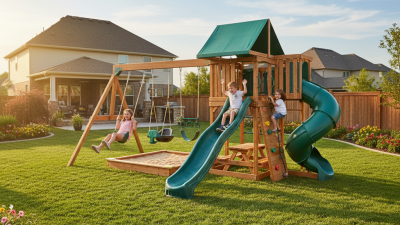
How to Choose the Best Playground Sets for Home Safety and Fun?
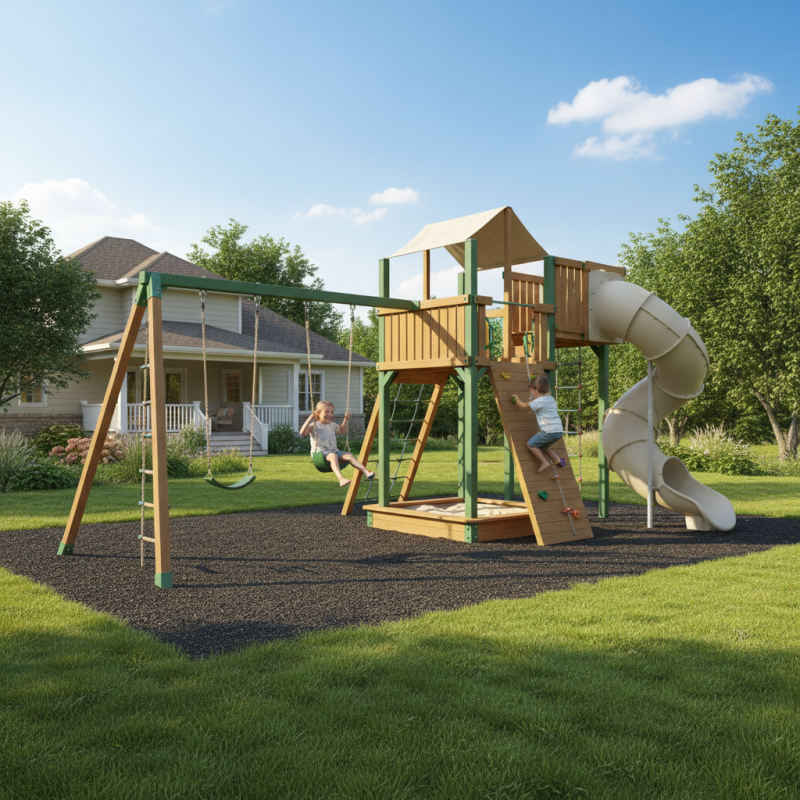
Choosing the right playground sets for home is essential for ensuring safety and fun. These sets provide a space for children to play freely while boosting their physical and social skills. However, not all playground sets are created equal.
When selecting the ideal set, consider materials, design, and age-appropriateness. Wooden sets can be durable but may require regular maintenance. Metal sets, on the other hand, might be easier to clean but could heat up under the sun. Additionally, check the safety ratings. Just because a set looks fun, it doesn’t guarantee safety.
Explore options that also promote imagination. Simple structures can spark creativity. However, overly complex designs may lead to confusion. Balance is key. Parents must reflect on their children’s needs and the available space. Ultimately, playground sets for home should foster enjoyment while prioritizing safety.
Understanding Playground Safety Standards and Regulations
Choosing the right playground set for your home involves understanding safety standards. In America, the Consumer Product Safety Commission (CPSC) provides guidelines for safe playground equipment. These recommendations emphasize the importance of surface material and equipment design. A safe playground should have shock-absorbing materials, like wood chips or rubber matting, to reduce injuries.
Tip: Always check if the playground equipment meets CPSC standards before buying. Avoid metal slides to prevent burns on hot days.
Additionally, age appropriateness is critical. Equipment should match the children's age group to ensure safe play. Playgrounds set for toddlers must be lower to the ground. They should also have features that prevent falls. Studies show that correctly designed play areas can reduce injury rates significantly.
Tip: Supervise children while they play. Consider installing safety gates to keep toddlers secure. Always review your space and make necessary adjustments. Remember that a fun playground can also be safe if you choose wisely.
Identifying Age-Appropriate Playground Equipment for Children
Choosing the right playground equipment is crucial for
safety and fun. Age-appropriate equipment ensures children play safely.
According to the American Society for Testing and Materials, playgrounds should cater to children ages 2-5 with smaller structures.
Slides and swings designed for this age group foster imaginative play while keeping safety in mind.
For older children, ages 5-12, equipment must be more robust. A study from the
National Program for Playground Safety reports that 70% of injuries come from falls.
Bigger slides and climbing structures fulfill their need for adventure but can pose risks if not appropriately designed.
It's vital to consider installation and maintenance regularly.
Parents often overlook the importance of soft ground materials.
Rubber mats or mulch can reduce fall-related injuries significantly. Children need freedom to explore, yet they also need safeguards.
Choosing equipment should balance excitement with safety measures to ensure children enjoy their playground experience fully.
Evaluating Material Durability and Maintenance Requirements
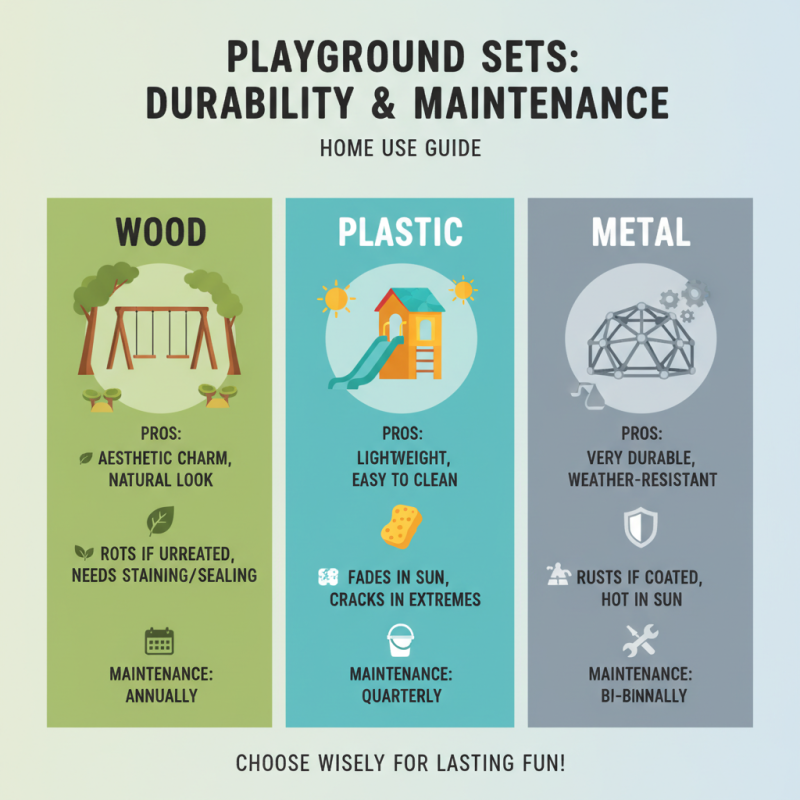
When selecting playground sets for home use, durability and maintenance are key factors. Parents should consider the materials used in these sets. Wood, plastic, and metal all have varying lifespans and weather resistance. Wooden sets can add an aesthetic charm to your yard. However, they require regular staining and sealing to prevent rot. Plastic is lightweight and easy to clean. Yet, it can fade in sunlight and might crack in extreme weather.
Metal structures are strong and durable. They resist weathering but can get hot under direct sunlight. Paying attention to the weight and stability of a set is also essential. A wobbly structure could lead to accidents. Regular inspections can catch issues early, minimizing risks. It’s worth noting that even high-quality sets may need repairs over time. Scratches or loose screws can happen, and they require attention to ensure safety. Therefore, parents should be prepared for occasional maintenance to keep the play area fun and secure.
Choosing the Right Size and Space for Your Playground Set
When selecting a playground set for your home, sizing and space are crucial. Consider your yard dimensions carefully. A large set in a small yard can feel cramped. Kids need room to run and enjoy themselves. Measure the space before making any decisions. Visualizing the area helps, too.
Think about the surrounding obstacles. Trees, fences, and gardens can limit safety. Ideally, allow at least six feet around the set. This distance prevents accidental collisions. Poor spacing can lead to frustration. Your children should explore freely without worrying about hitting other objects.
Children's needs can change rapidly. A smaller set might fit now, but what about the future? As they grow, they desire new challenges. An adaptable design can be beneficial. Reflect on your options thoroughly. Compromises may lead to regrets later on. Balancing safety and fun is key in any decision.
How to Choose the Best Playground Sets for Home Safety and Fun?
| Dimension |
Recommended Size |
Space Required |
Age Group |
Safety Features |
| Play Set Height |
5-7 ft |
10 ft x 10 ft |
3-8 years |
Soft edges, non-toxic materials |
| Platform Size |
3 ft x 3 ft |
7 ft x 7 ft |
2-5 years |
Railings, non-slip surfaces |
| Slide Length |
6 ft |
6 ft x 8 ft |
3-10 years |
Rounded edges, safety grips |
| Swing Set Height |
8 ft |
15 ft x 10 ft |
4-12 years |
Swing safety stoppers, high backs |
| Overall Size |
10 ft x 8 ft |
15 ft x 15 ft |
3-10 years |
Impact-absorbing surfaces, sturdy construction |
Incorporating Fun Features and Activities for Engaging Playtime
Creating an engaging playground set at home involves fun features that entice children to play actively. According to a study by the American Academy of Pediatrics, active play is essential for children's physical and mental development. Installing swings, slides, and climbing structures can boost their motor skills as well as social interactions.
Consider incorporating features like a sandpit or water play area. A report from the National Recreation and Park Association highlights that sensory play significantly enhances creativity and problem-solving skills in children. Safety should not be overlooked. Ensure surfaces are soft, like rubber mulch or foam padding.
It’s worth noting that not every feature will be used equally. Observing your children can reveal what they enjoy the most. Some may prefer climbing while others gravitate towards slides. Flexibility in design gives room for adjustments. Embrace the imperfections; this journey of play should bring joy but also challenge to adapt and enhance the experience.
Playground Set Features Comparison