What Are the Top Outdoor Litter Bins for Global Buyers?
Choosing the right Outdoor Litter Bins is more complex than comparing prices or capacity. Global buyers must consider climate, foot traffic, collection routines, and local user habits. A seaside promenade needs corrosion resistance. A busy transport hub needs fast servicing and strong impact protection. A quiet hotel garden may need discreet design instead.
Professor David C. Wilson, a respected waste-management academic, has described waste as “a resource in the wrong place.” That idea matters here. A well-positioned bin can prevent overflowing bags, scattered packaging, and avoidable cleaning work. However, the best Outdoor Litter Bins are not identical everywhere. Regional weather changes material performance. Rain, salt air, ultraviolet exposure, and freezing temperatures all test construction quality. Stainless steel can offer durability, but its grade and finish still require careful review. Recycled plastic may reduce maintenance, yet buyers should check its strength and end-of-life options.
Practical details often decide success. Look for secure liners, smooth internal surfaces, clear openings, and accessible servicing points. Consider whether collection staff can empty each unit safely and quickly. Add cigarette compartments only where appropriate and responsibly managed. Some designs appear impressive but perform poorly during peak use. That is easy to miss.
This guide examines leading Outdoor Litter Bins for international buyers. It compares capacity, materials, security, accessibility, maintenance, and visual integration. No product suits every location. A thoughtful compromise may be better than a perfect-looking specification. Real performance begins with observing the site, not merely reading the catalogue.
What Are Outdoor Litter Bins and Why Do Global Buyers Need Them?
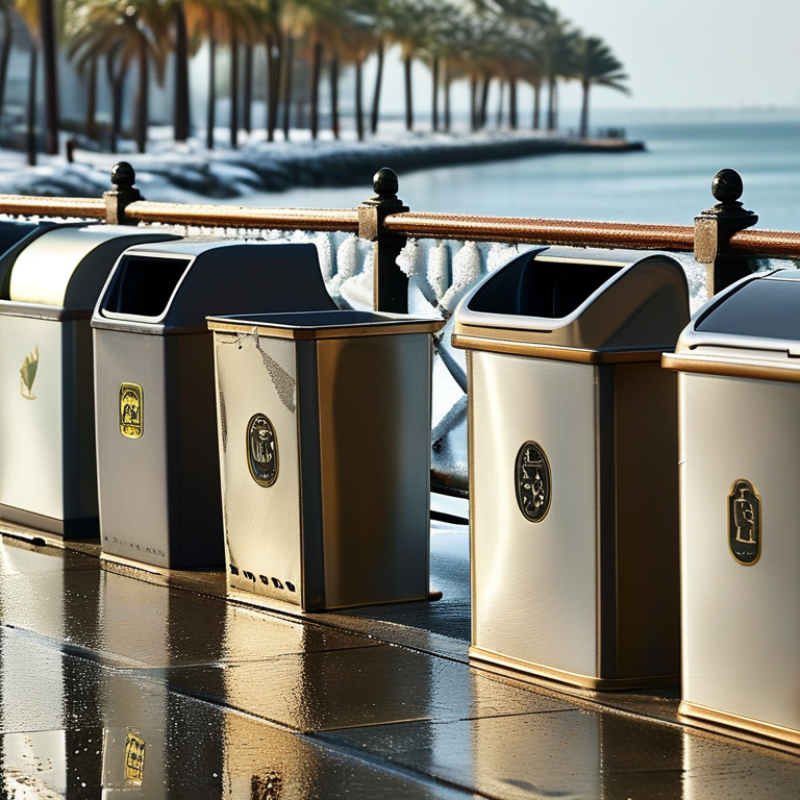
Outdoor litter bins are purpose-built containers for collecting waste in open public spaces. They are commonly placed near parks, streets, schools, transport areas, and commercial entrances. Unlike indoor bins, they must withstand rain, sunlight, wind, dust, and frequent handling. Their structure often includes weather-resistant panels, a stable base, and an opening that limits scattered rubbish.
Global buyers need them because outdoor waste quickly affects hygiene, appearance, and visitor confidence. A covered opening can reduce rainwater entering the container. A strong liner makes emptying safer and faster. Clear access points also help users dispose of bottles, food packaging, and paper correctly. In my experience, capacity should match foot traffic, not only the site’s physical size. A small bin may overflow before the next collection. That looks minor. It is not.
Tips: Check local weather, cleaning routines, and waste volume before selecting a model. Powder-coated metal suits demanding public areas, while recycled plastic may offer lighter handling and corrosion resistance. Confirm fixing options for concrete, paving, or uneven ground. Ask for material details, drainage design, replacement-part availability, and cleaning instructions. Do not judge quality by appearance alone. Some attractive bins are awkward to service, and that weakness may appear after installation. Test the opening height and liner removal process with real staff before ordering large quantities.
What Materials and Features Make an Outdoor Litter Bin Durable?
Outdoor litter bins face rain, sunlight, wind, and repeated handling every day. Durable materials must match the local climate, not just the purchase budget. Galvanized steel offers strong impact resistance when its protective coating remains intact. Stainless steel performs well near coasts, where salt air quickly attacks ordinary metal. Recycled HDPE resists moisture and many cleaning chemicals, while its lighter weight simplifies installation.
Construction details matter as much as the material itself. Look for fully sealed seams, corrosion-resistant hinges, and smooth internal surfaces. These features reduce trapped water and make routine washing less unpleasant. A removable liner helps staff empty the bin without lifting a heavy container. Ventilation can control odors, but large openings may invite rain or pests. Small design choices create visible differences.
Anchoring is often overlooked. A strong bin can still tip on uneven pavement. Adjustable feet or secure ground fixings improve stability in busy public areas. Rounded edges protect users, especially children, and a clear opening supports quick disposal. In site evaluations, I have seen attractive bins fail because their drainage was poor. The lesson is uncomfortable: specifications may promise durability, but maintenance decides its real lifespan. Even the best coating will deteriorate if scratches are ignored or wet waste remains inside for days. A practical buying review should examine replacement parts, cleaning access, and local repair skills before approving the design.
Which Standards and Sustainability Factors Affect International Purchasing?
International buyers should treat standards as a purchasing filter, not a decorative certificate. Outdoor litter bins face rain, UV light, freezing temperatures, and repeated impact. Ask for test reports covering load strength, corrosion resistance, weathering, and safe operation. EN 840 may guide wheeled waste containers in some markets, but it is not universal approval. Local fire, accessibility, anchoring, and public-space rules still matter. Request the exact standard edition and testing laboratory. Certificates can mislead.
Sustainability begins with service life. A bin lasting ten years can reduce replacement waste, transport, and installation labor. Look for recycled steel or verified post-consumer polymer. Require clear material percentages and replaceable parts. Powder coatings should have documented chemical controls and outdoor performance data. Ask whether liners, lids, and fasteners can be recycled together. They often cannot. Life-cycle data, environmental product declarations, and ISO 14001 systems support better comparisons. However, certification does not automatically make a product low-impact.
Reliable sourcing also needs evidence beyond a sales sheet. Buyers can request factory quality records, batch traceability, warranty terms, and independent inspection before shipment. Check drainage design in person. Trapped water quickly exposes weak detailing. Sample units should be tested in the target climate, especially beside salty roads or under intense sun. Recycled content may create color variation, which is not necessarily a defect. Suppliers should disclose it clearly. I would not select the cheapest bin without calculating delivery, maintenance, repair, and disposal costs. The calculation is imperfect. Ignoring it is worse.
What Are the Top Outdoor Litter Bins for Global Buyers?
Which standards and sustainability factors affect international purchasing?
The procurement relevance index is an illustrative 0–100 benchmark synthesized from commonly specified international purchasing criteria. Weather resistance, corrosion protection, recycled content, accessibility, waste separation, fire performance, documentation, and maintainability are frequently evaluated alongside applicable requirements such as ISO 14001, ISO 4892, EN 840, REACH, and local fire and accessibility rules. Requirements vary by country, climate, installation site, and tender specification.